
Publications
La-Qi
A Qigong Method for Maintaining the Health of Body and Mind
By Buyin Zheng and Simone Fella
La-Qi is a method that provides quick and simple access to the perception and use of Qi. Familiar to many in one way or another, this exercise is presented in detail both in the sequence of movements and the accompanying mental images. Through continuous practice, internal and external Qi are connected, thereby strengthening the body’s functions and activating self-healing powers.
Source: Taijiquan & Qigong Journal 3-2022


Qigong in the Prevention and Healing of Chronic Diseases and Cancer, Part 1
By Buyin Zheng
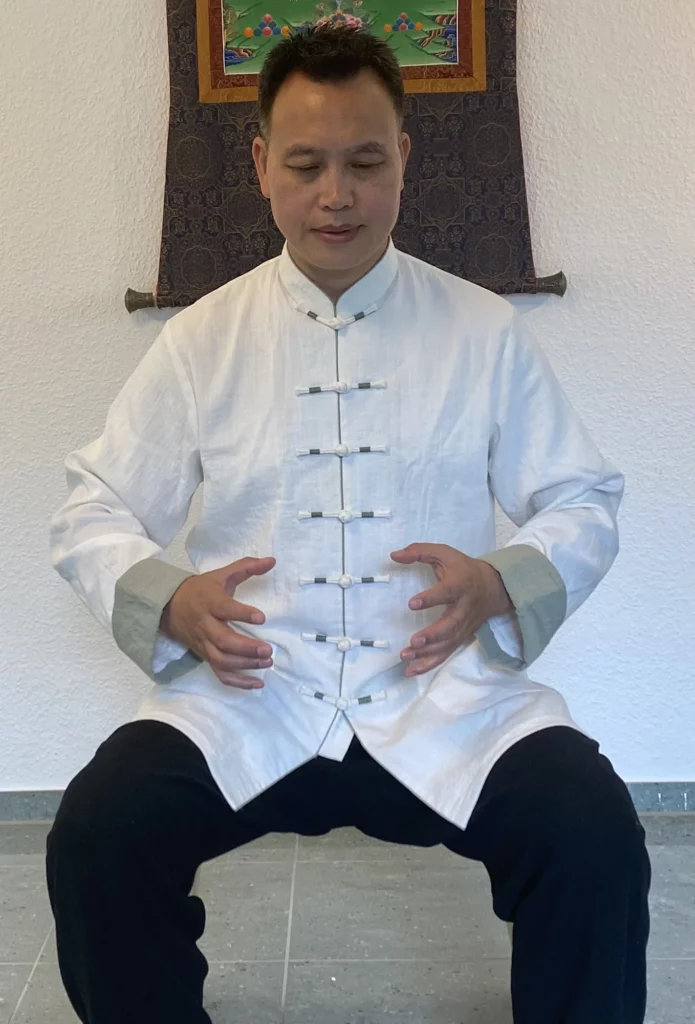
The health-promoting effects of Qigong are increasingly recognized here. Chinese Qigong Grandmaster Buyin Zheng explains how, according to Traditional Chinese Medicine (TCM), diseases arise and how standing exercises from Qigong in particular can help to perceive pathological changes inside the body at an early stage and dissolve the underlying blockages.
Source: Taijiquan & Qigong Journal 4-2019
Qigong in the Prevention and Healing of Chronic Diseases and Cancer, Part 2
By Buyin Zheng
Qigong can be an effective method for activating self-healing powers. In the previous article, Grandmaster Zheng discussed the development of diseases from the perspective of Chinese medicine and explained why standing exercises in particular help to perceive pathological changes in the body at an early stage and dissolve the underlying blockages. In the second part of his article, he describes the role and interplay of relaxation, stillness, and naturalness, as well as the three phases that practitioners typically go through during regular training of standing exercises. He provides detailed practice instructions for the so-called “horse stance” from Shaolin Neijin Qigong.
Source: Taijiquan & Qigong Journal 1-2020


Life Cultivation Through the Seasons, Part 1
Autumn
By Buyin Zheng
In China, a special healing art has developed since time immemorial that views the human being holistically and takes into account the close connection with nature. Chinese healing art, whose roots include traditions we now call Qigong, shows ways to overcome bad habits and build positive qualities. It strives for a life in harmony with nature and makes effective prevention as well as sustainable healing of diseases possible. Buyin Zheng presents this overarching approach and provides practical guidance for life cultivation in accordance with the seasons.
Source: Taijiquan & Qigong Journal 3-2016
Life Cultivation Through the Seasons, Part 2
Winter
By Buyin Zheng
A holistic view of the human being is an essential prerequisite for sustainable healing and the preservation of health. Within the framework of Chinese healing art and the associated life cultivation, holism is reflected, among other things, in the harmonization of emotions, balanced and adapted nutrition, good lifestyle habits, as well as Qigong exercises and acupressure. Zheng Buyin provides practical guidance for life cultivation in accordance with the seasons, in this issue for winter.
Source: Taijiquan & Qigong Journal 4-2016


Life Cultivation Through the Seasons, Part 3
Spring
By Buyin Zheng
In traditional Chinese healing art, which also includes many Qigong methods, it is always emphasized that adapting one’s behavior to the change of seasons is of great importance for maintaining health. Essential areas include emotions, nutrition, lifestyle habits, Qigong exercises, and acupressure. Buyin Zheng shows how we can bring ourselves into harmony with the emerging Yang energy of spring through these five aspects.
Source: Taijiquan & Qigong Journal 1-2017
Life Cultivation Through the Seasons, Part 4
Summer
By Buyin Zheng
Chinese healing art shows ways to overcome bad habits that harm health and instead build positive qualities. It enables us to recognize our own inner landscape and harmonize it with the rhythms of nature. It also offers us a variety of methods to train the body, develop the mind, and stay or become healthy. In the final part of the series “Life Cultivation Through the Seasons,” Zheng Buyin describes how we can bring ourselves into harmony with the Yang energy of summer.
Source: Taijiquan & Qigong Journal 2-2017
Qigong and Virtue
A Path to Harmonizing Body and Mind
By Buyin Zheng
The fact that Qigong always involves both body and mind represents one of the essential differences from Western forms of exercise. Buyin Zheng, who grew up with a traditional understanding of Qigong, explains how the Qi of the Earth and the Qi of Heaven can nourish the various aspects of human existence. Both forces affect not only the organs, for example, but also a person’s qualities, which are likewise assigned to the transformation phases.
Source: Taijiquan & Qigong Journal 2-2009
Qigong and the Psyche
By Zheng Buyin and Carsten Meyer
The health-promoting effects of Qigong also include a strengthening and healing influence on the psyche. Based on the experiences of Qigong masters and results from empirical studies, Zheng Buyin and Carsten Meyer explain how Qigong can support mental balance. Of particular significance is the fact that Qigong, as a “self-practice,” promotes self-awareness and inner motivation.
Source: Taijiquan & Qigong Journal 2-2009


Ways to Let Go and Dissolve Inner Blockages
Methods of Shaolin Neijin Yizhichan Qigong
By Zheng Buyin and Simone Fella
Letting go, apologizing, and forgiving are methods found in many spiritual traditions. In Neijin Yizhichan Qigong, they have a special place alongside movement exercises and meditation for strengthening health and attaining inner peace and happiness. Simone Fella and Zheng Buyin, who is making Neijin Yizhichan Qigong known in Europe, explain the respective focuses of the three areas. In silent meditation, one’s own life is examined step by step and freed from “old burdens.” By letting go of memories as well as expectations, apologizing for one’s own misconduct, and forgiving suffered injuries, inner blockages and thus causes of mental illnesses and physical tensions can be overcome and positive energies released.
Source: Taijiquan & Qigong Journal 1-2008